Advisor Perspectives | Sasha Grabenstetter | April 29, 2025
Episode Summary
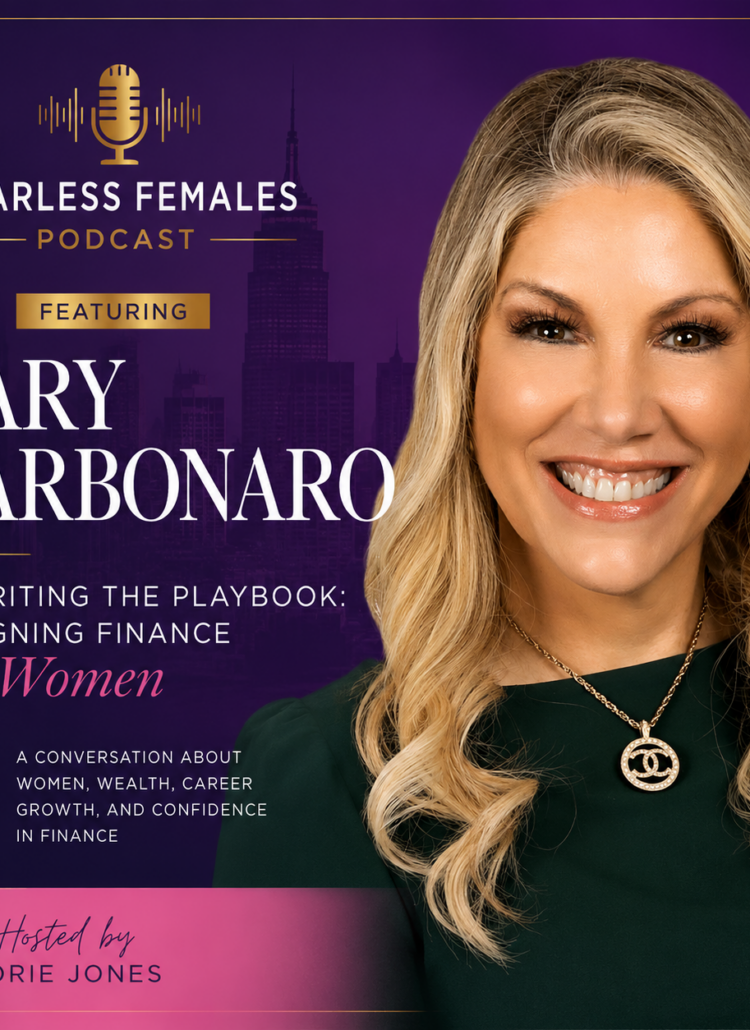
A passionate advocate for women in the financial space, Cary Carbonaro shares actionable insights from her upcoming book, Women and Wealth: A Playbook to Empower Clients and Unlock Their Fortune, in the latest Heart of Advice Podcast episode. Cary dives into how financial professionals can better serve female clients by addressing unconscious biases, taking a “how female-friendly is my practice” quiz, and asking the right questions to uncover unique needs. She makes it clear that traditional playbooks designed for men don’t translate—and explains how planners can adapt to help women feel confident and secure in their financial futures.
Cary’s approach is empowering and practical, challenging professionals to rethink their strategies while providing timely tools to enhance client relationships. If you want to create more equitable practices, deepen client trust, and improve outcomes, this episode is a great place to start.
Here’s What You’ll Learn in This Episode:
- Finding a Career Path in Financial Services
- Understanding Women’s Unique Position in Wealth Management
- Taking a Values-first Approach to Financial Planning
- Regaining Financial Confidence After Death or Divorce
- Being a CFP Ambassador and Other Essential Outreach
- Making Your Practice More Female-friendly
Resources Mentioned in This Episode:
- Women and Wealth: A Playbook to Empower Clients and Unlock Their Fortune
- The Money Queen’s Guide for Women Who Want to Build Wealth and Banish Fear
- Candid Conversations: Suddenly Single
- Women as the Next Wave of Growth in US Wealth Management – McKinsey & Company
- $54 Trillion Will Transfer to Widows Through 2048; More Than 95% Will Go to Women – Cerulli Associates
- CFP Ambassador Program
- Power Women’s Summit
- Women’s Leadership Alliance
- The One Thing
Quotes:
- “I always knew that I wanted to help women with money… When I got out of college, my first job was at JPMorgan Chase. And I didn’t really know that CFP was a profession because I was so young, and I didn’t know that I could actually get paid to give people financial advice. It was the most incredible thing when I found out I could do it.”
- “[Women] outlive their spouses. They’re inheriting wealth from their parents and from their spouses. Women are becoming primary breadwinners in the United States, which has never happened, which is also really exciting, and are opening businesses faster than men… And the industry is really not ready for it. We haven’t changed our client experience, our language, how we talk to women, or how women work with financial services.”
- “It’s interesting because, the men who are listening, you are going to lose seventy to ninety percent of your women clients when their spouse dies. And guess who’s getting them? Me. So I’m just going to sit there with a big funnel and collect them all unless you read my book. And then I’m giving you the answers in my book. But it’s funny because I actually am sitting there and just collecting these clients because they’re leaving the advisors where they don’t feel heard, understood, listened to, respected.”
- “I tell my clients that I go through this with them, it’s almost like we’re trauma bonded because we just went through this horrible life event, which is why they’re never leaving me and why I have such high retention because of what I go through with my clients. Now is it more work? It’s a ton of work. It’s emotional for me, emotional for them. It’s so much more work. I don’t know if most people are interested in doing this work because it is so much more work and so much more difficult, but it’s so much more rewarding over time and in the end. And you get to help so much more.”
- “Whoever gets this right with women is going to be positioned for decades to come. So, is this a business decision for people? There’s no reason not to look at what you’re doing and make it better and make it better for women.”
Full Transcript:
Sasha: Welcome to the Heart of Advice podcast presented by eMoney. I’m Sasha Grabenstetter.
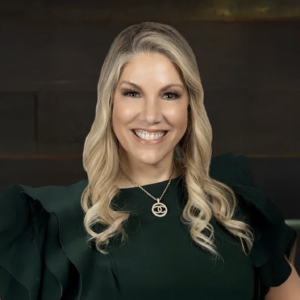
Connor: And I’m Connor Sung. We’re your eMoney experts. Today on the podcast, we have Cary Carbonaro. Cary is a certified financial planner, a CFP board ambassador, a bestselling author of The Money Queen’s Guide for Women Who Want to Build Wealth and Banish Fear, and the upcoming book, Well Women and Wealth, a playbook to empower clients and unlock their fortune. She’s named among Investopedia’s top one hundred financial advisers multiple times. She’s appeared on Fox and Friends, The Today Show, CNN, CNBC, NPR, and she is a financial professional with over twenty-five years of experience. First off, Cary, thank you so much for joining us.
Cary: Thank you for having me. Happy to be here.
Sasha: Of course.
Connor: Well, I guess first off, could you just walk us through your career a little bit? How did you end up where you’re at today?
Finding a Career Path in Financial Services
Cary: Sure. Well, I always knew that I wanted to help women with money. It’s interesting. There’s a book called The One Thing where you go back on your life and look at the threads, and I’ve always wanted to help women. I didn’t even know that it was a profession, really, when I first started. When I grew up, my dad was a banker at JPMorgan Chase, and I was his oldest daughter, and we bonded over money instead of sports. So he used to take me to Take Your Daughter to Work day before there was a Take Your Daughter to Work day. So I knew everything about financial literacy and banking and things that, like, girls don’t normally learn growing up. We went to foreclosure auctions, Straight Talk with the Dolans, which is really going back. They were a couple in the eighties that used to do, like, financial literacy talks. They were married. And so we did all these great things together. And when I was even in high school and college, in college, I started a sorority for women to make them feel safe at my college. This was late eighties, early nineties. I helped my girls with budgets and finding spending money in their budgets when I was in college just because I thought it was easy and fun. And then when I got out of college, my first job was at JPMorgan Chase. And I didn’t really know that CFP was a profession because I was so young, and I didn’t know that I could actually get paid to give people financial advice. It was the most incredible thing when I found out I could do it. And this was, like, a real thing. And then I got my CFP, and then I worked first in the banking industry, and then I decided to go out on my own, and pretty much the rest is history. And I’ve always focused on women in my practice because women need more help than men because they have a lot of strikes against them like the pay wage gap, the wealth gap, the longevity, the lack of confidence, the being a little bit more conservative, and the fact that all of this happens to women, and they don’t usually get a financial planner until something terrible happens like a death, a divorce, a disability, a job loss. So women don’t just on a sunny day, they don’t wake up and say, I’m gonna go hire a financial planner. So I want women to just be on a sunny day and wake up and say, I’m gonna hire a financial planner, and when it’s not a terrible situation. And so, anyway, I always knew that I wanted to help women, and I can translate these complicated complex topics into things that women understand. And I do it with empathy, and women seem to respond to it. So I know I’m doing the right thing. It’s my life’s work. Very long answer.
Connor: It’d be a lifetime. No. It’s wonderful.
Sasha: We love it.
Connor: A lifetime of financial education, literacy, and advice. It’s awesome.
Sasha: I mean, I’ll just say that we have a lot of similarities. I started out in banking. I was a bank teller. My dad was very, like, much like you’re an independent woman, Sasha. You’re gonna go be a banker. And I was like, I don’t know. And then obviously I ended up here at eMoney, doing what I do now. But I was listening to you actually on another podcast and you’ve spoken about the importance of making financial planning more inclusive for women, which obviously you just talked to us about. But I wanna know about what shifts you’ve seen in the industry and what more needs to happen to kind of ensure that lasting change both for firms and for those of us who have male allies. So, some key insights would be wonderful to hear for our listeners.
Understanding Women’s Unique Position in Wealth Management
Cary: Well, I mean, let’s talk about the wealth shift and the wave that’s coming. Right? So that is really the basis for my book that’s coming out. It is based on the McKinsey study that women are the next wave in wealth management. So, by 2030, which is, you know, five short years away, women are going to control two thirds of the nation’s wealth, which is 30 trillion dollars, which is the same as the GDP of the United States. And Cerulli just came out, which is even more recent. If you go out a little bit further to 2048, it’s going to be 54 trillion. So, ‘T’ with a ‘T’. It’s an incredible amount of money and, you know, there’s a confluence of a lot of different events happening to have this happen. So, you know, it’s the fact that women are living longer because of longevity. It’s the fact that they outlive their spouses. So, they’re inheriting wealth from their parents and from their spouses. It’s also because women are becoming primary breadwinners in the United States, which has never happened, which is also really exciting, and are opening businesses faster than men. So, it’s a combination of all these incredible events that are happening all at one time. And so the industry is really not ready for it. We haven’t changed our client experience, our language, how we talk to women, how women work with financial services. There’s another study that was done by Harvard Business Review that said financial services is the least sympathetic to women but has the most to gain if they get it right. So, I hope that people really decide to do, my book is packed with, like, hundreds of action items to make your practice female-friendly and to change things and to change the client experience for women and uncover unconscious bias and blind spots that you don’t know. And it’s okay because, you know, this industry was set up by men for men, and it’s okay because that’s who the clients were. But now if the clients are changing and the whole landscape is shifting, we have to be prepared for it. And right now, we’re not. So, I say there’s so many things to do, but let’s start somewhere. Do start to do some of the things. Uncover your unconscious bias. Take a “How Female-friendly is my Practice” quiz. There are just questions to ask yourselves, questions to ask your clients in each chapter of my book to uncover the differences between women and men and why women respond differently.
Connor: Yeah. Well, number one, I would say congratulations on your new book.
Cary: Thank you.
Connor: And again, it is called Women and Wealth, a Playbook to Empower Clients and Unlock Their Fortune. Do you mind just going through, I know you just walked through a couple of the, maybe, the cliff note versions of some of the actionable things that firms can do. But can you, number one, remind us when it’s coming out and also just offer up a little bit more color commentary on some of the most powerful takeaways you hope that readers will get from it?
Cary: Sure. So it is coming out April 29th, 2025. It is going to be, I really wrote it for, there are two audiences. One is anybody who wants to work with women and understand women differently. You know, the whole men are from Mars, women are from Venus, or the other way around. I don’t remember that one. But, anyway, we definitely are different, and we respond to things differently. So, we can’t take the male playbook and just apply it to women because it doesn’t translate. I always say the language, even just the language, the jargon, the sports references, the “beating the S&P 500” doesn’t resonate with women. Women want to know: Am I going to be okay? Am I going to outlive my portfolio? You know? Am I going to be a bag lady and homeless? That’s the whole bag lady fear thing. I have that myself, so I know all about that one. And then they also have, you know, can I spend without guilt? Can I buy a second home? Are my kids going to be okay? Like, these are the things that keep women up at night, and they just want to know that they’re going to be okay. And that doesn’t really translate as much to sharp ratios and beating the S&P and, you know, all the nitty-gritty of what’s in your portfolio. You know? I think a lot of times, we try to put in what we want or what we think our clients want rather than what they actually want, which is: tell me I’m okay. So back to what else is in the book because I know I sorry. I went on a little bit of a tangent there.
Sasha: We love tangents.
Cary: So what’s in the book is, you know, there are so many different things about women. I talk about why there are no women advisers. Where are the women in the industry? Then I talk about women on where we are with the history of women and money, the history of female breadwinners, why women leave their advisers. That’s a big one. You know, it’s interesting because the men who are listening, you are going to lose seventy to ninety percent of your women clients when their spouse dies. And guess who’s getting them? Me. So I’m just going to sit there with a big funnel and collect them all unless you read my book. And then I’m giving you the answers in my book. But it’s funny because I actually am sitting there and just collecting these clients because they’re leaving the advisers where they don’t feel heard, understood, listened to, respected. And guys, I’m not blaming you. You don’t even really sometimes know that you’re doing it. It’s okay. Like, I’m not being judgmental at all, I just want to teach you how to work with women. And so there’s a lot of unconscious bias and blind spots, and I have a quiz, actually. It’s not my quiz, it’s Harvard’s quiz on how to uncover the unconscious bias blind spots. And then I’ve got case studies on why it’s hurting the financial planning profession with women and what’s happening that’s wrong. And then I’ve got case studies of how to do it right. And it’s not just my case studies. I brought in a bunch of incredible women from all other CFPs from all other firms who also gave me their case studies. And so you can review what other women are doing with their women clients. And then also another case study for women is that women refer seven times more than men. So they’re more loyal. They’re absolute referrers. They’ll be with you forever because I’m a great case study for that. I don’t know if you know my career history, but over the last five years, I’ve moved my clients four times in five years with an almost one hundred percent retention, which is just crazy. And actually, my situation is a little bit extreme. It was because I was at United Capital, which was sold to Goldman (Sachs), then I wound up at the wrong firm on the other side, and now I’m at the right firm, and I’m not moving again. But it took me, that path was a long arduous path, and my clients stayed with me the whole time because I was just trying to find the best home for them. I was actually just trying to find what I had at United Capital.
Sasha: One hundred percent retention is amazing to me. I just want to say that. But I really enjoyed hearing about the history of women just deciding that they don’t want to be with their male advisors, they leave and I love that you joke that they all go to you, and I hope that they do all go to you. Because I think women especially feel more comfortable with other women, and those men who do have that empathetic lens. And so, even some of our own eMoney research looking at the future of AI and technology and those human-centric skills are so important. So I’m glad that you brought that up, Cary.
Taking a Values-first Approach to Financial Planning
Cary: It is. It’s honestly empathy is the most important thing with working with women. You know, listening, hearing, respecting, empathy, establishing the trust is literally the most important thing. And knowing that you literally care about them, this is not a business transaction. This is a lifelong bond with my client. It’s not about business or getting paid. It’s about me helping them with their financial future. It’s a different lens.
Sasha: I agree. Definitely a different lens. Connor, do you want to add any color?
Connor: I just think it’s so cool. I’m thinking just more broadly about this shift for us as a profession into more of the ‘why’ behind making any sort of financial decision. And I think we’ve could, you know, as I look back to the typical broker model or even in insurance commission-based model where it’s very transactional in nature. And while the advice or the guidance or the recommendation may have been based off of something more comprehensive or more holistic in nature, I think, as I look across all of the engagements that we have today across all of eMoney’s users and clients, that it’s becoming so much more important to hit the ‘why’ behind making the financial recommendations and getting more to people’s core values, their core needs, and aligning the financial recommendations with those things. And then you get to all of the stuff that you’re talking about, like the trust, the satisfaction, the referrals, all of the actual stuff that comes from building a real relationship with somebody and understanding that I’m going to recommend x, y, and z, but ultimately, this is in support of you buying a second home or you being able to do what you want to do within your actual life, not just your financial life. And then I think about the way that I was trained for the CFP for some of the investment courses where the most important pieces are your alpha and being able to describe risk and return and sitting down and having that conversation with somebody and telling them about all of these percentiles and different distribution models. It just, as it should go right over people’s heads.
Cary: His eyes glaze over.
Connor: Exactly.
Cary: You know what else is interesting? What you were talking about is that when I was at United Capital, we had a very female-friendly client experience because we used a lot of behavioral finance tools. And women really seem to like the behavioral finance tools because one of the things we used to have at United, which doesn’t exist anymore, but we had the (Your) Money Mind©, which was a little quiz to figure out why you make the decisions that you make around money. Using what your subconscious does on every decision. And just understanding that and then finding out where you fall. Are you fear? Are you commitment? Are you happiness? Money mindset. And so it’s a very interesting thing to just, women love that, and I’m sure men do too, but women seem to gravitate towards that more. And then you were also talking about the values piece with women. I have a lot of clients that are really interested in ESG because they really want to put their money where their mouth is, and they really want to tie their values to their investment choices. I have so many clients who are interested in that, and then we have what’s great now is we can do the exclusions and the inclusions. It used to be back in the day, you could only exclude things that you don’t want, but now you can include and exclude. So, you can really tailor the portfolio to meet the woman’s/clients’ goals, preferences, life choices, and really match it, which I really love.
Sasha: I love all the things that you’ve said about just making sure that we have that empathy and that trust-building. And that’s where my heart lives. Connor knows that. We talk about empathy a lot in our team calls and how important it is. So I appreciate you bringing that up. I do want to switch gears really quickly because I do know that you were able to help us with some quotes in our Candid Conversations: Suddenly Single eBook. And that eBook really highlights, you know, losing a spouse, whether it’s through death or divorce. And it creates, as you know, immense stress, particularly for women, who often face that unique financial challenge and emotional challenge during those transitions. Those life transitions are very difficult. Of course, we’d also can talk about gray divorces, which have reached a record high level in the United States with approximately thirty six percent of divorces now occurring among those ages fifty and older. So, when you’re working with women navigating these specific life changes, talking about death or divorce, how do you help them regain that financial confidence and stability?
Regaining Financial Confidence After Death or Divorce
Cary: Well, so it’s interesting because this is a big part of my practice, obviously. And it’s interesting. The other thing that I think our profession only looks at women as divorced or widowed. Yet we have a whole circle of life of other life events that women have. And so that’s another whole story, but that’s also in my book. I talk about it’s not just divorced and widowed. It’s so many different choices of life cycles of women. But when I say, let’s talk about the ones that everybody talks about, which is, you know, divorce and widowhood because those are the ones that are actual life transitions where money is moving. Now money is moving in some of these other ones, but still, these are the ones that we talk about. So how do we get these women back on track? Well, my ultimate goal is for them to come to me before this happens. But if they don’t, I’m dealing with it now when it happens. And so it’s such an emotionally stressful time because money is so emotionally, people are so emotionally tied to their money. And so there’s so much that’s wrapped up with that. I’ve had a client whose husband died, and she had a very expensive house. And this house was killing her financial plan, and she could not let go of it because it was their house together. And I remember one night, I literally woke up. I had, like, a nightmare about it for her. Woke up the next morning and said, you need to sell this house. I don’t know how to like, this is going to hurt your long-term plan if you don’t sell this house. What can I do to help support you sell this house? You know? And she was like, I think I need, like, somebody to help me clear the house out. And so we got—I got her that. And then, anyway, she finally sold the house, but it took a long time and a lot of counseling with her. And also talking to her kids about it, her daughters, we finally sold it, and now her financial plan is perfect. Like, her scores are great. She’s never going to run out of money. She’s in a fantastic spot. But if she’d kept that house, it would have been devastating. And it was the emotional tie to that house that was stopping her from selling that house. So, you know, there’s a lot of layers to this. It’s like peeling an onion when you’re dealing with a widow or a divorce. And I went through, like, the worst divorce in history, so I can really, really help on that. Like because I’m like, oh, mine was so much worse. Like, I can go through all the stories with them and all the war stories and tell them it’s going to be sunny and beautiful on the other side. Now, fortunately, I have not done, I have not been a widow yet. Hopefully, I will not be a widow, but likelihood is, I will. And so I know. Right? So on the other side of that, I lost my dad, so I can be there with them on losing the, you know, the most important man in their life. My life, other than my husband. And so I go through that with them so I can help them get through and process and get to the other side. And, you know, there’s a lot of grief in the middle. There’s a lot I mean, you’re a counselor. You’re a grief counselor almost at some point, you know, parts. And you’re a therapist, and you’re a friend, and you’re an advisor, and you’re so, like, you’re playing all these roles at one time. And I tell my clients that I go through this with, it’s almost like we’re trauma bonded because we just went through this horrible life event, which is why they’re never leaving me and why I have such high retention because of what I go through with my clients. Now is it more work? It’s a ton of work. It’s, like, emotional for me, emotional for them. It’s so much more work. I don’t know if most people are interested in doing this work because it is so much more work and so much more difficult, but it’s so much more rewarding over time and in the end. And you get to help so much more.
Sasha: But I really do appreciate that empathetic lens. Like, just saying, you know, hey. I’ve been through the trenches. I understand what this is like and really being able to hold that perspective and be able to share it with them. I think that’s really beautiful. So thank you.
Connor: And being willing to, I mean, you talked about how much additional work it is. And I’m sure from a time standpoint, from an emotional standpoint, and effort, you’re investing a lot in your clients as well. And I think that it’s a testament to your ultimate desire of just helping people feel more safe as you talked about opening your sorority. But, like the financial safety, the emotional safety, the personal safety, it’s really cool. And honestly, I totally agree that there are a lot of financial professionals that probably aren’t interested in getting to that level with their clients. But at the end of the day, you know, if they have a good financial relationship and they’re sending people on the right path, then I think that that’s great. People are still getting decent education, decent advice, and recommendations, but those, you know, they don’t have as sticky of clients. Their retention rate is not going to be as good as yours. So it definitely will show in the relationships that you’ve built, not just the client adviser relationships, but the personal relationships that you’re clearly investing your own time and energy into.
Sasha: Definitely great.
Connor: Well, I want to pivot a little bit. We mentioned at the top of the podcast that you are a CFP board ambassador. Can you just talk a little bit about what that role entails, some of the stuff that you’re doing with them, and, ultimately, how you’re looking at helping the next generation of financial planners, especially the women who build successful careers in our industry?
Being a CFP Ambassador and Other Essential Outreach
Cary: Of course. So I’ve been a CFP board ambassador for over a decade. That’s really long for me. What that role means is that I represent the professional in the media. But it also gives me a lens into a lot of different things that the CFP board is doing, which is absolutely incredible. So one of the things, I actually just got back from a trip, the first CFP board global mission trip to Argentina. It was the first time we’ve ever done anything like that to go over and learn about their economy and meet with their world leaders. It was absolutely incredible. And we also, of course, I met the woman who’s in charge of financial literacy for women over there in Argentina, and we’re going to try to do a collaborative project. So that’s, like, super exciting to me. But that anyway, that’s a little bit more of a tangent. But my regular role with the CFP board is I do the media outreach and always related to women and money because that’s my lane, and I stay in my lane. But I also am involved with the CFP board center for financial planning, which is the nonprofit arm, which is giving women scholarships to enter the profession. That is going to the Girl Scout convention where we took a booth at the national convention and worked with women, oh, sorry, kids age five through 18 and taught them what a CFP is, and that this is a great profession. And we had, like, selfie booths that said future CFP. We had future CFP tattoos, which I give out every year in my Halloween basket. They get full-size candy and that. But it’s my same neighborhood, so they’re used to it. But everybody loves that. But I do. I give them out every year. And so, but it was nice because someone said to me, so what’s the follow-up? What came out of that? And I said, what came out of that is we planted the seeds to young girls that this is a profession. They know what a lawyer is. They know what an attorney is. I’m sorry. What a CPA is. They don’t know what a CFP is. They don’t know it’s a profession. They don’t know it’s something they could do or that they would be good at it. They don’t know, it’s not like people are talking about it in elementary school or high school. It’s just, we have to reach them at a younger age. And so I think we planted a lot of seeds. There were thousands of girls there at that conference. So things like that. And then we also have this incredible thing that’s coming up on May 20th of this year. It’s called a Power Women’s Summit. And we’re bringing together top women in the profession, the CFP board, and top nonprofits working with women in financial literacy, actually like Rock Street, Wall Street, which goes into high schools and middle schools, teaching women about money and the profession, but more about just financial literacy. And so we have got to figure out how to get more women in, how to get more women to stay. I’m also involved with the WLA, which is the Women’s Leadership Alliance, which is another nonprofit that mentors women who are already in the profession so we can keep them in the profession. And so that’s another avenue to spread the word and get more women involved and keep more women in. And I don’t know. I’m sure you guys know the number, but it’s 23.9 percent women CFPs.
Sasha: We definitely need that number to be higher. So but I’m obviously going to come to your house for Halloween so I can get a CFP sticker tattoo. And then I can also get a full-size candy bar because that sounds amazing. But I love this Power of Women’s Summit. I love that we’re really focusing on putting women together in the same room to kind of fix this issue and, yeah, continue to push it forward.
Cary: Well, it’s such a big issue that nobody has the answers. That’s the thing is we have to collaborate, and we have to put our heads together because not one person can do this. It’s like pushing a boulder up a hill and having it roll back on you. And there are so many issues that are preventing it from moving forward, and nobody has the answers. That’s the problem. If I had them, I would already give them to you. I wrote about it in my book, and I said, this is a collaborative effort. We need to all come together on this.
Connor: It’s so cool. You have so many discussions, like, conversations and roles that you play both as an adviser and as an advocate. And it’s I just commend you on spending all of your time. It sounds like since very early on in your life, you’ve stumbled your way to here, and you’ve spent a lot of time and effort in ensuring that those that may be in similar shoes to where you were know that there are opportunities out there for them to feel passionate about what they do in a space that they love and helping clients that they’re looking for. Right. I do just want to of all of the conversations, the people that you engage with, if you had to bubble up to I’ll give you one to three. But if there was one to three of, like, the most important financial topics that you’re talking about right now, what would the one to three be?
Cary: You mean for me? Or just in general? On the advocacy role or on the client role?
Connor: Just in general.
Cary: Okay. That’s hard then because I have so many. Well, for me, my number one topic is let’s change this industry and make it more female-friendly. That’s one of my most important topics in the industry, in my advocacy role. Then in my role with clients, I want women to be a hundred percent owning their own financial future and being responsible for their own financial future and not relying on somebody else and not thinking somebody else is going to take care of it for them and also just being their own, owning it for a woman to own it for herself. And then the last thing I would say is that the industry recognizes, besides making it more female-friendly, but that it changes so that it’s literally welcoming to women. And there was another thing that Cerulli said in their latest article that came out at the end of January. And they said whoever gets this right with women is going to be positioned for decades to come. So is this a business decision for people? Like, there’s no reason not to look at what you’re doing and make it better and make it better for women.
Making Your Practice More Female-friendly
Connor: That leads me to my next, uh, off-the-cuff question here, which is for those firms, individual advisors, enterprises that are interested in becoming that successful group that becomes more attractive, more inviting, more open, more welcoming to women clients. What is the first thing that you would recommend that they do?
Cary: Read my book.
Connor: Nice.
Cary: That’s an easy one. That was a softball.
Connor: It’s perfect.
Sasha: Love it. I’m so excited about the future of women in personal finance. I agree with you, Cary, I think that we’re headed in a good direction. We’re trying to fix the problem. And we’re trying to do it together. So I think that it’s going to be really impactful. As we’re wrapping up, Cary, we have just one last question that we ask all of our guests on the podcast. And I want to know how you would define the heart of advice when it comes to financial planning?
Cary: So it’s interesting because I know that that’s the question that you ask everybody. I don’t know what anybody else’s answer is. But my answer is it’s my life’s purpose to educate and empower women, and that’s the heart of financial advice to me.
Sasha: I like it. Short, sweet, to the point. Focus on the women. I love it. Well, Cary, thank you for being on. We’ve really enjoyed this conversation. I know Connor has as well. And I love the insights. And I hope that our listeners can really take them to heart and decide that, you know, women are important, and we’re going to really focus on that next chapter with them. So thank you.
DISCLAIMER: The eMoney Advisor Blog is meant as an educational and informative resource for financial professionals and individuals alike. It is not meant to be, and should not be taken as financial, legal, tax or other professional advice. Those seeking professional advice may do so by consulting with a professional advisor. eMoney Advisor will not be liable for any actions you may take based on the content of this blog.